
a velvet ant
Level One
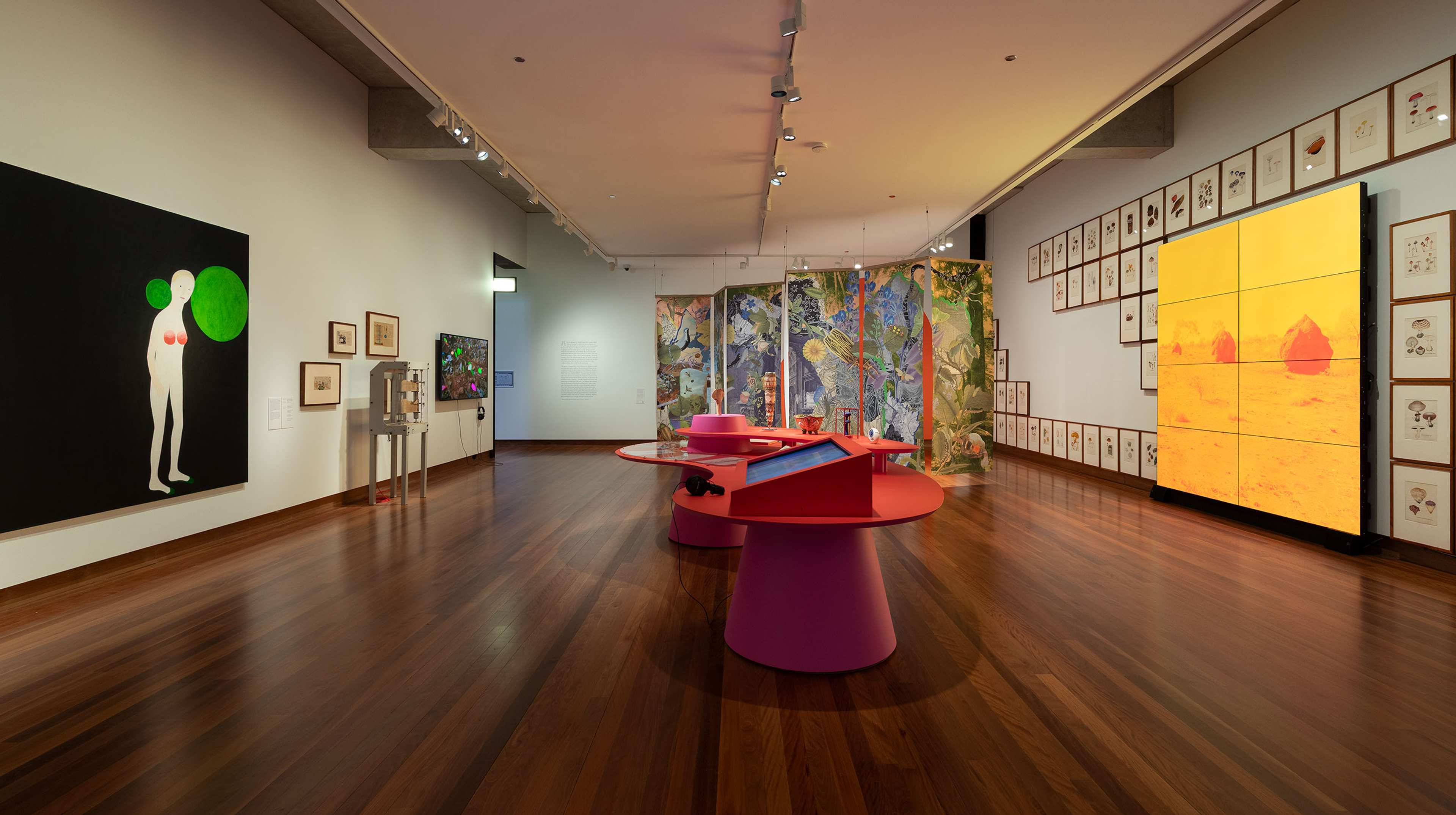
Installation view of A velvet ant, a flower and a bird, Potter Museum of Art, the University of Melbourne, 2026. Photography by Christian Capurro.
The velvet ant is not an ant at all, but a wingless wasp. Its extraordinary surface absorbs more than 99% of visible light. Scientists studying this remarkable blackness have discovered that it comes from the structure of its body rather than pigment. The velvet ant’s microscopic ridges trap light, inspiring new technologies in fields such as solar energy and optics.
This gallery explores how animals and materials carry forms of intelligence shaped by their environments. The velvet ant reminds us that knowledge does not belong only to humans. Bodies themselves respond to the world through structure, adaptation and survival.
Across history ants have appeared in stories and fables as symbols of cooperation and collective life. One early example is Llibre de les bèsties by Ramon Llull, a medieval bestiary that used animals to explore questions of power, justice and moral reasoning. These traditions continue in modern stories such as The Adventures of Maya the Bee by Waldemar Bonsels, where ants appear as a community whose intelligence emerges through cooperation rather than leadership.
Explore more in the exhibition on Level one.