
Eucalypts: A Story in Twenty Trees — an extract
Context
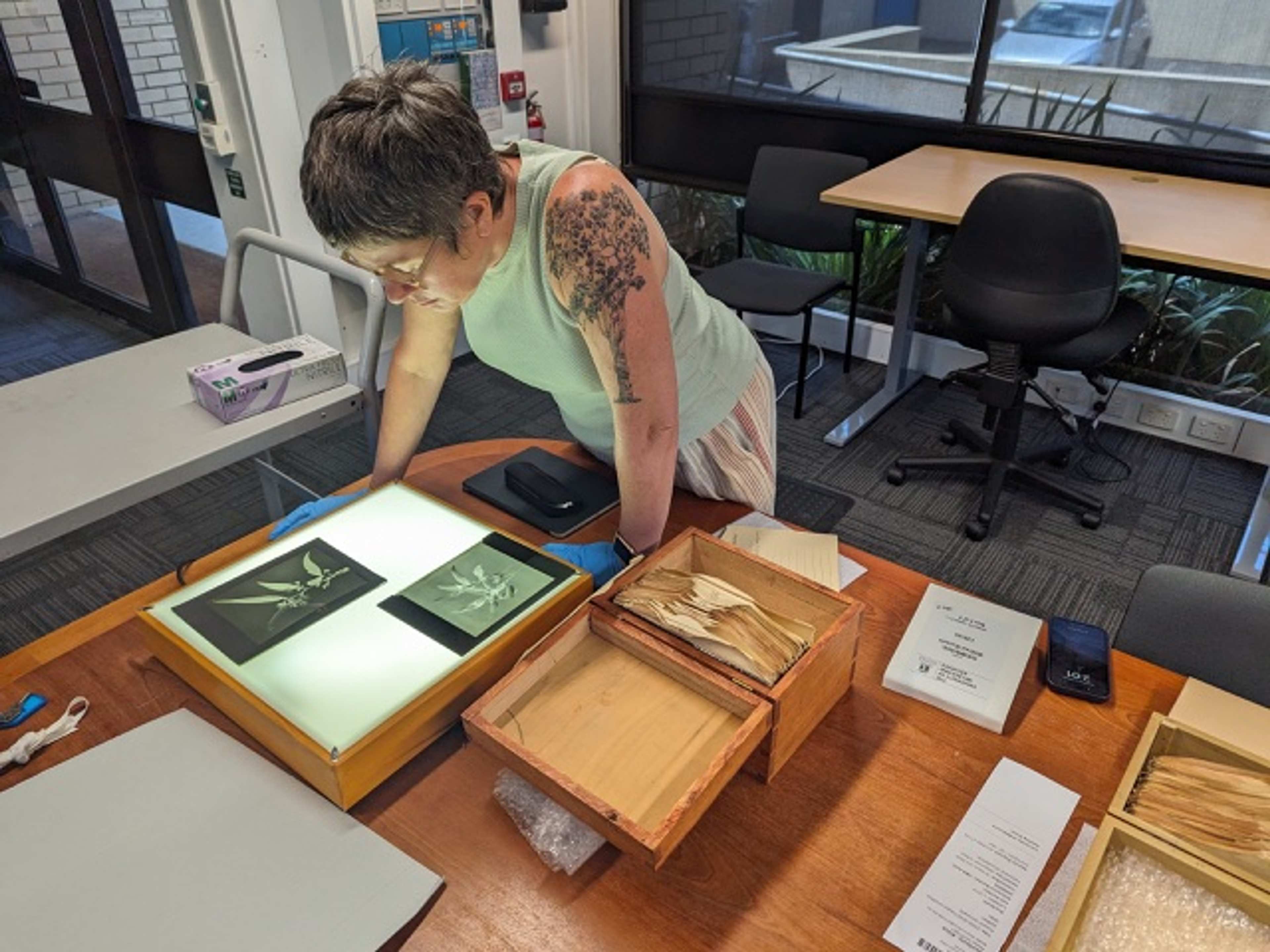
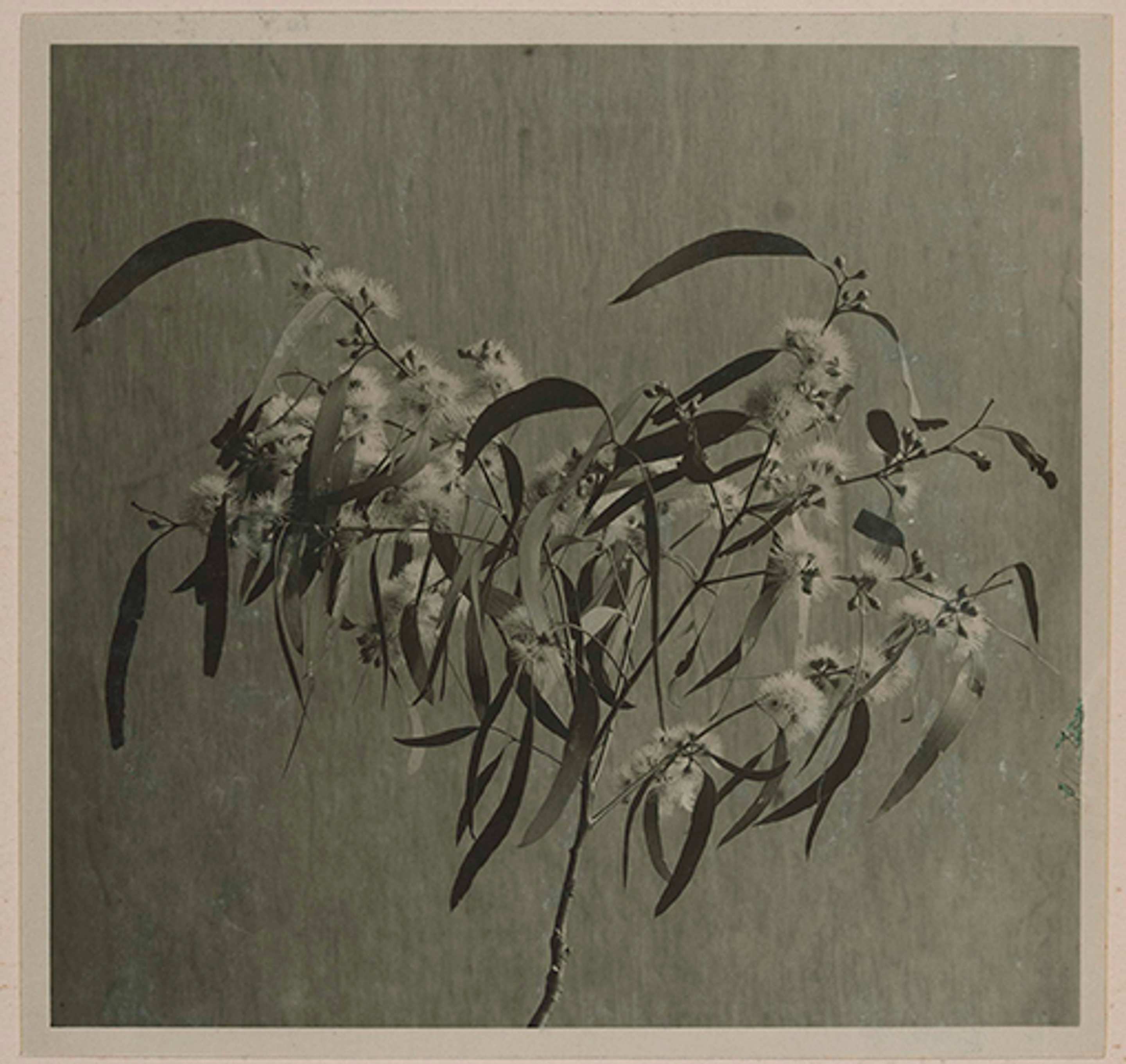
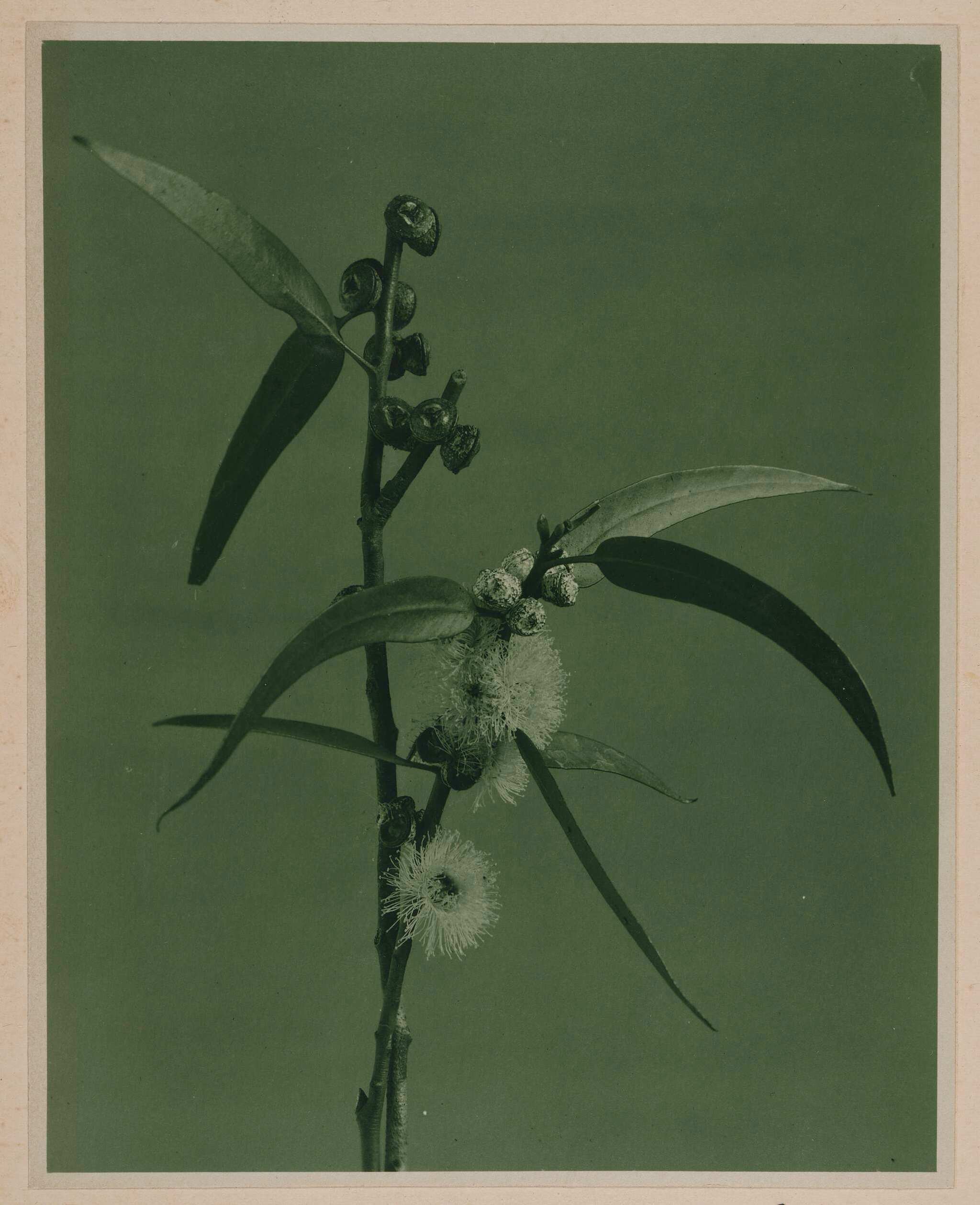
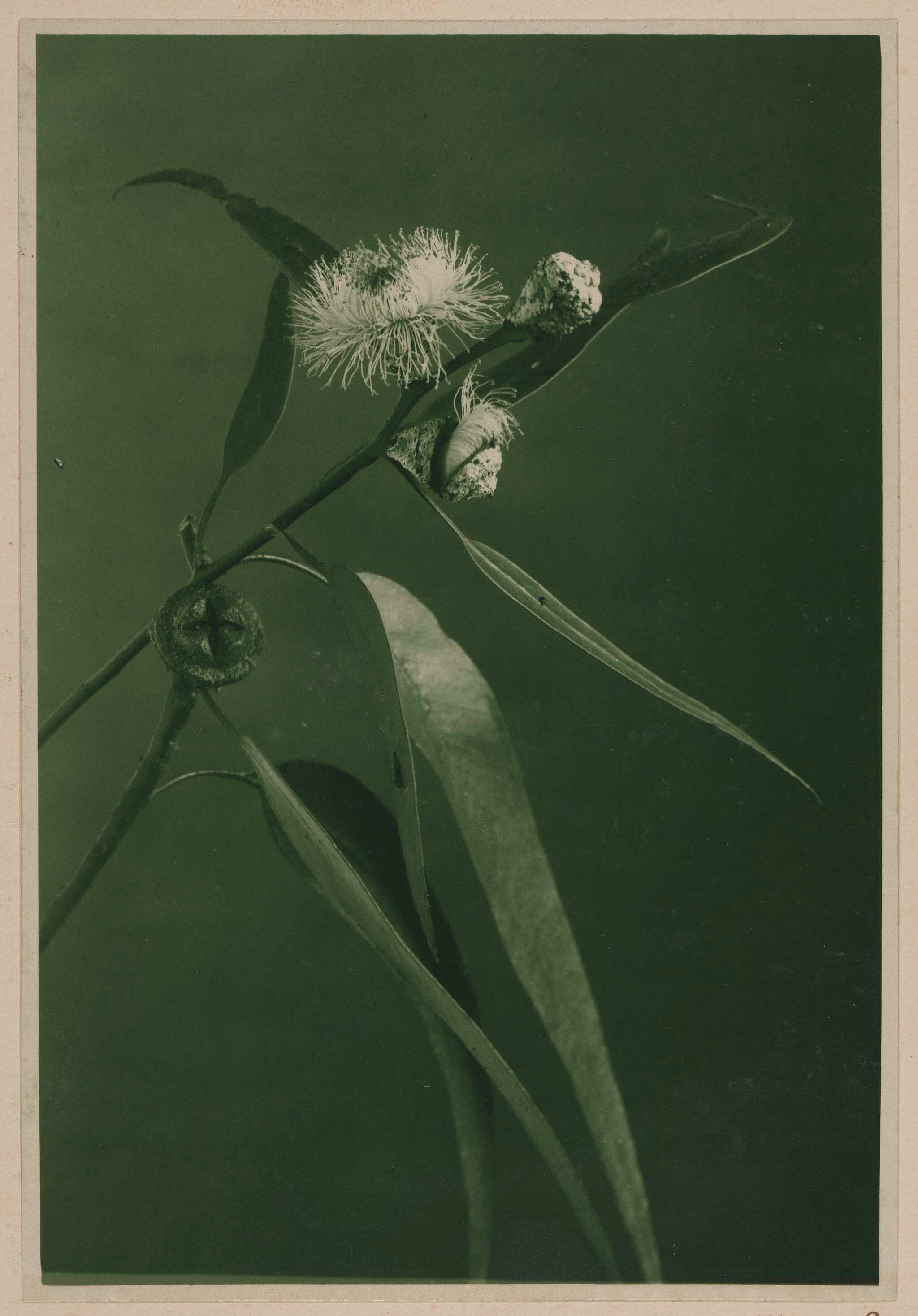
The following work is extracted from an essay begun under the auspices of a Miegunayah Creative Fellowship started in 2023– 24. The long-form essay/book has an anticipated publication date of 2027. My focus when working with Russell and Mab Grimwade’s collection was on a selection made from the thousand or so books, many of them now rare, that once comprised Russell Grimwade’s personal library. I also read books that were acquired by Mab after Russell Grimwade’s death in 1955. Finally, to be better able to contextualise and understand this collection, I read books and articles that were not in the Grimwade Collection at all. My criteria for choosing which of the extraordinary and wide-ranging collection of books to read from the library was that the book be about eucalyptus or otherwise mention them. I focused on white explorers’ diaries or commentary thereon as well as works on the identification of eucalyptus written by key figures from colonial Australia’s botanical world. (These figures included Richard T Baker, Joseph Banks, JH Maiden, Baron Ferdinand von Mueller and Russell Grimwade himself.) The books in this personal collection were always framed as an investigation of the trees’ use as a commodity. This sits at odds with the intimacy of Grimwade’s actual relationship with trees over the course of his lifetime. And then there are his own photographs, many of them very lovely, and some of which have been included here. There is a halo, a life force, an aura, particularly in the dry plates of the glass negatives of these photos. They gesture to another dimension in the lives of these trees.
Introduction
I find I can’t write about the natural world, its past or its future without returning in my mind’s eye to the final days of 2019 and the first of 2020. The same time that the fellowship this essay has emerged from – writing about eucalypts – was meant to begin. I’m not sure I have recovered from the fires and the two years of lockdown that followed them. I suspect none of us have. Instead, we find ourselves changed. Far more significantly, Country, our forests, our rivers, our wetlands, our oceans, have not recovered either. There is no recovering. Damage keeps landing, like a series of waves in a swell, dumping the future on eroding shores.
Metaphors aside, my specialty is trees, not oceans. Over the past few years I’ve come to understand how Western modes of thinking directly impact our ability to tackle the biodiversity crisis. We need to address the colonial legacy in the way we think about ecological systems and definitions. The Linnaean taxonomic system. The legions of scientists, explorers, botanists, naturalists, horticulturalists and gardeners who worked in the business of Economic Botany. Plants were valuable. Each time a new colony was claimed, entire ecosystems were flung into that treasure chest. There was money to be made and adventures to be had; lives would be lost and cultures erased. Staggering amounts of wealth were amassed and millions of people enslaved to grow crops of cotton, rubber, silk, nutmeg, sugar, more.
Things were slightly different in Australia, in part because the motivation for colonisation was the management of convicts, and in part because commodities like eucalypts and the oil they produced were never going to generate the same dizzying amounts of money as crops that could be harvested on an annual basis. However, the pattern remained the same. Forests that had thrived for thousands, even millions, of years were commodified, destroyed, reduced in what would barely be the sway of a bough in tree time. They were no longer forests. They were timber.
Thousands of pages have been written on the subject of the identification of eucalypts – 510 pages in Baron Ferdinand von Mueller’s ten-volume, late nineteenth-century Eucalyptographia – and much of what is written can be read as a tale of sound and fury, signifying … confusion. It was a relief to discover that chemist and botanist Russell Grimwade’s An Anthography of the Eucalypts, first published in 1920, is not as wordy as von Mueller’s earlier, more famous work. Grimwade’s brevity at first struck me as a weakness but I came to understand it to be a strength. His work offers a unique and nuanced perspective that is not a simple repetition of truisms and tropes characteristic of the botanical writing of the nineteenth and early twentieth centuries.
The eucalyptographia, the anthography, the key, the florilegium, the book of ‘elements’, the ‘handbook’, the book of ‘research’ – all names for a botanical handbook – is an eccentric form. These works can be both vague and specific, expansive and particular. Compendia are, inevitably, imperfect documents with the authors’ personalities on full display. Von Mueller was obsessive, JH Maiden methodical, Richard T Baker detached and Grimwade a thoughtful synthesiser. I find this eccentricity appealing; there is a freedom in it, and Grimwade’s endeavours have inspired my own foray into the world of compendia.
Australia has changed almost beyond recognition since invasion. More than 27 million people live here now. Just before the fires took off, I read that of more than 900 species of Eucalyptus, almost one-quarter were considered to be threatened with extinction. 'As keystone species, [eucalypts] define the landscape of the entire Australian continent, and are culturally significant to its First Nations people' [1]
If you don’t have trees, there are a whole lot of knock-on effects. Logging and deforestation contribute to global warming, as well as – counterintuitively, I know – making thinned forests more vulnerable to bushfires. Deforestation also increases the risk that new diseases will emerge, diseases that will cross over into human populations. John Vidal, the Guardian’s environment editor, reported: 'It is actually humanity’s destruction of biodiversity that creates the conditions for new viruses and diseases like COVID-19, the viral disease that emerged in China in December 2019, to arise – with profound health and economic impacts in rich and poor countries alike. In fact, a new discipline, planetary health, is emerging that focuses on the increasingly visible connections among the well-being of humans, other living things and entire ecosystems.' [2]
How did we – by which I mean white people – fuck things up so badly? I carry this question with me as I read Lieutenant James Cook’s journal and his descriptions of sighting south-eastern Australia. He rounds Cape Howe, east of Mallacoota: ‘The weather being clear gave us an opportunity to View the Country, which had a very agreeable and promising Aspect …’ He sails alongside what we now call Batemans Bay, steering ‘along shore NNE having a gentle breeze at sw’.[3] He sees smoke along the shore and fires that light up the night.
How to describe the extraordinary beauty of that place? The rhythm of coastal lakes, estuaries, mangrove systems and lagoons that open and close to the ocean, as if breathing. That ripple and corrugate for hundreds of kilometres along the coast. And the forests! Trees soar above the cliffs and grow down to the water’s edges. The Yuin people who lived here walked the Bundian Way, the 365-kilometre pathway from the sea to Targangal (Mount Kosciuszko), the highest point on the Australian mainland, to harvest the bogong moths that emerged in their millions from caves towards the end of what Westerners call summer.
Cook sails onwards, north to the place where HMS Endeavour first drops anchor. He’s sailed into Dharawal country, to Kamay. The English will call it Botany Bay, so named for the richness of the botanical specimens that will be found there.
Gummifera, 1770
‘We found 2 sorts of Gum one sort of which is like Gum Dragon and is the same as I suppose Tasman took for gum lac, it is extracted from the largest trees in the woods … [it is] … as large or larger than our oaks in England and grows a good deal like them and yeilds [sic] a reddish gum.’
The grunt work of Economic Botany – collecting – began soon after the Endeavour first arrived at Botany Bay on 29 April 1770.
Joseph Banks was a central figure in this period of rapid colonial expansion. He was one of the funders of Cook’s first expedition to the Pacific, and his social rank was higher than the Endeavour’s captain, Lieutenant Cook. It was Banks who later lobbied for the colonisation of Australia, not Cook. Banks went on to mentor many of the significant botanists of his day.
His offsider Daniel Solander had been trained by Swedish taxonomist Carl Linnaeus, who was, according to the article ‘Science, Coloniality, and “the Great Rationality Divide"', the father of modern systematics, on taxonomies and naming of plants’. The Linnaean system coevolved with a ‘civilization project to make the plants more European’. They did this by 'changing the foreign plants’ ‘barbarous’ names into systematic categorizations in Latin … Furthermore, colonialism made possible the exploration and cultivation of profitable plants needed in the West; here again, Linnaeus was one of the major figures in these efforts. Colonial botany was not only about exploration but also about big business' [4]
Solander is believed to have referred to the first specimen he collected at Botany Bay as gummifera for its reddish gum (red bloodwood) but the naming was never official. The red bloodwood was first given a Latin name in 1788 by German botanist Joseph Gaertner, who called the gum Metrosideros gummifera. In 1795 James Edward Smith, the founder of the Linnean Society, called a specimen of bloodwood that he’d been sent from Port Jackson Eucalyptus corymbosa. In 1903, JH Maiden, curator of the Technological Museum, Sydney, and author of A Critical Revision of the Genus Eucalyptus, declared the name E. gummifera ‘invalid’ and used the name E.corymbosa to describe red bloodwood.Grimwade used the term E.corymbosa a few years later. In 1995, Eucalyptus and Corymbia were reclassified into two separate genera, and this tree became Corymbia gummifera. This confusion regarding the naming of the first specimen of eucalyptus collected set a precedent.
Of course, in 1770, C. gummifera already had a name. Several names, in fact, in some of the hundreds of languages that were spoken around the continent. The people of southern Queensland called the tree boona; the people of the Eora nation called it mannen. Eucalyptus trees had an extant relationship with a people, and with Country. In 1874, early settler Samuel Gason wrote: 'There are places covered by trees which are held very sacred – the larger ones being supposed to be the remains of their fathers metamorphosed. The natives never hew them, and should the settlers require to cut them down, they earnestly protest against it, asserting they would have no luck and themselves be punished for not protecting their ancestors.' [5]
Despite some botanists’ interest in Aboriginal naming systems (Robert Brown and George Caley were two such men), Grimwade’s view, at least as he expressed it in 1930, was the prevailing one. 'The settlement of Australia in 1788 introduced botanists to a virgin and uncharted continent of vegetation, and the student of to-day must admire the amount and accuracy of the work of the early botanists.' [6]
Sixty-three years later, anthropologist Deborah Bird Rose wrote: 'Vic River Aboriginal people talk about white Australian culture in ways that indicate that they think it is in a state of epistemological chaos … Europeans, many Aboriginal people say, are unable to understand how to evaluate the quality of events and thus are unable to discern the difference between that which it is important to remember and that which it is important to forget.' [7]
That is, once the word ‘eucalyptus’ was uttered in the late 1770s, it entered the realm of epistemological chaos. These trees have been contested, their species ‘discovered’, named, and named again. They were, according to Grimwade’s Anthography, ‘remarkably defined and easily recognised’, but overlaying ‘an orderly and precise arrangement’ upon them was bewilderingly difficult. ‘A hundred years ago or so this object probably seemed easier of attainment than it does today.’ By 1930 there were 250 species ‘recognised and recorded with scientific accuracy’. These days the more than 900 described eucalypts are divided into several genera: Eucalyptus, Corymbia, Angophora and the recently proposed Blakella. When I spoke recently to revered botanist and botanical illustrator Leon Costermans, he told me that his book Native Trees and Shrubs of South-Eastern Australia was first published in 1981 but that each time it has been reprinted – well into this century – the list of names that have been revised and changed has become longer and longer. It is now over 250 years since Banks and Solander first stepped onto Dharawal land and yet, as Dean Nicolle wrote in 2024: 'Many genus reclassifications have been far more taxonomically disruptive than necessary to achieve monophyletic genera … Traditionally, most eucalypts have been placed in the genus Eucalyptus. However, the genus-level classification of the eucalypts has been in a state of flux since 1995, when the segregate genus Corymbia was described, resulting in new binomials for over 100 species, including a number of well-known species' [8]
As for M.gummifera / E. corymbosa / C.gummifera, I’m going call it ‘bloodwood’. Now, there’s a word rich in metaphoric resonance.
Eucalyptus amygdalina, 1806 / Eucalyptus regnans, 1888 (a doubtful species)
‘This Eucalyptus is one of the most remarkable and important of all plants in the whole creation! Viewed in its marvellous height when standing forth in its fullest development on the slopes or within glens of mountain-forests, it represents probably the tallest of all trees of the globe; considered as a hardwood-tree of celerity in growth it ranks among the very foremost; regarded in reference to its timber the tall variety can fairly be classed with the superior kinds of Eucalypts, and contemplated in respect to the yield of volatile oil from its copious foliage it is unsurpassed and perhaps not equalled by any other tree in the whole world! … This lofty state of the tree passes as one of the White Gum-trees (and even also as Mountain-Ash in the Dandenong- Ranges), while phytographically it has been distinguished as ‘regnans’. ’
Eucalyptus regnans has been given many names. Pre-invasion, the tree’s name included Woolgook and Wangnarra. After white settlement, it was commonly known as mountain ash, white mountain ash, giant gum and blackbutt (and erroneously as messmate and stringybark, trees that are now classified as E.obliqua ). It was considered a subspecies or variation of Tasmanian black peppermint, which was named E. amygdalina by French botanist Jacques-Julien Houtou de Labillardiere in his Novae Hollandiae Plantarum Specimens (Plant Specimens of New Holland) in 1806. However, the variety of the tree’s presentations confused people. In 1871, von Mueller used the name E. regnans – from the Latin word meaning ‘ruling’ – to describe really tall mountain ash, noting that, ‘[t]his species or variety … represents the loftiest tree in British Territory’. [10] Perplexingly, though, he continued to consider mountain ash to be a variety of peppermint – that is, E. amygdalina– for another eleven years before officially declaring that E. regnans was a species in its own right. Richard T Baker, the co-author of A Research on the Eucalypts, Especiallyin Regard to Their Essential Oils (1920) and director of the Sydney Botanic Gardens, uses the term E. amygdalina as late as 1902 but for messmate, not mountain ash. He goes on to describe the mountain ash growing in the Blue Mountains as E. sieberiana. [11] Baker hasn’t got much to say about E. regnans, but in his introduction he does acknowledge that the endless pursuit of species identification is particularly unhelpful in relation to a specific tree, a relationship that is inevitably affected by the tree’s location, its age and the weather. 'We have placed little value upon supposed varieties of eucalypts morphologically determined, because at the best they can only be varieties of varieties, and are thus likely to cause confusion. After all, the difference between a variety and a species is only one of degree, and much must be left to one’s judgment as to how far the division or subdivision is advisable.'
In 1903, Maiden writes about the difficulty of identifying the tree, and in 1920 Grimwade calls the tree both mountain ash and E. amygdalina, and describes it as ‘adjacent’ to E. sieberiana, E. australiana and the variant E. inophloia. He also considers it to be a variation, rather than a true species. 'This is not a specially variable species, but it went early into cultivation in Europe, and for many years was abundantly despatched thereto. Many of the names were given to immature specimens, growing in pots; it is consequently one of the species richest in synonyms, and I do not suppose for a moment that I have ascertained the whole of them.' [12]
The difficulties of identifying mountain ash seems shocking these days, given that it is the largest flowering plant in the world, the hero of Tasmania’s and Victoria’s great forests, and the species is considered a total rockstar, albeit ageing and embattled. Confused attempts to contain the wildness of the gum tree through clear categorisation becomes starkest in conversations around the eucalypts, and specifically the mountain ash’s propensity to hybridise. According to Ashley Hay (the author of Gum), George Caley was the first European to realise that the trees could hybridise. A hundred years later, in the early 1900s, Baker quoted von Mueller as saying that this survival strategy was ‘aberrant’ and Maiden as calling hybrids a ‘doubtful species’. Baker continued: 'Some attention has been given to this subject, but so far without any measure of success, as it appears difficult to understand how natural hybridisation pertains in the origin of eucalyptus species … Baron von Mueller at one time did not regard hybridisation as impossible, but thought that all ordinary chances are against it.'
In recent years, genome-wide sequencing of numerous mountain ash populations suggests that hybridisation occurs frequently. To give just one example, a population of so-called mountain ash at Wilsons Promontory was recently found to be genetically closer to E. obliqua. Certainly, hybridisation is more likely when eucalypts are in geographic proximity – that is, in forests – and it seems that there has been increasing hybridisation as our forests become degraded. It is a strategy that can be useful when a species that has adapted to one kind of location, such as the top of a mountain, finds itself facing increased temperatures. This is why hybrids of snow and peppermint gums grow on the slopes of Mt Macedon. We can think of hybridisation as one way in which eucalypts can walk up or down a mountain as they are forced to manage changing temperatures.
Mountain ash forests face increasing pressures as the intensity of bushfires increase and logging into the burnt forests presses on. This most glorious of trees is in danger of extinction.
The oldest mountain ash trees have been standing for hundreds of years. Their canopies soar and microclimates roil around them. Their buttress roots push nutrients down into the soil; they hold the forest floor together; they generate water. Their forests are less vulnerable to bushfire and among the most carbon-heavy in the world. When large old mountain ash fall, they decompose over time. They keep the forest floor moist and make the area less vulnerable to bushfires. The work of large old trees continues for decades or even centuries after their death. Their reign is long, if, that is, they are left on Country to do that work. I could go on. I won’t. What I am trying to say is that the loss of our mountain ash forests would be catastrophic.
Grimwade felt similarly. He was passionate about mountain ash, describing the experience of standing in a forest of these trees as akin to being in a cathedral. While he was not a critic of Empire, he was certainly aware of the ways in which colonisation had led to a devastating cycle of drought, fire and erosion. In the logic of the extraction economy, these losses were often described as inevitable and therefore ‘natural’. The cost of doing business, if you like. Grimwade, unlike many of his peers, did not see the cost as acceptable. He campaigned for the conservation of forests, was an office-bearer of the Australian Forest League and a contributor to its journal, Gum Nut. In what seems like a contradiction these days, but wasn’t back then, he supported the opening of the Australian Forestry School and endowed upon it the Russell Grimwade Prize to encourage scientific forestry. In 1937 Grimwade wrote, in some despair: 'We have a duty to leave our successors as good or a better land than we have enjoyed. If we do not learn by the mistakes that time is now revealing in other countries we are falling in our trust … Are we yet taking action to avoid those mistakes? There is ample evidence that we are not.' [13]
In 1967 Grimwade’s biographer John Poynter underlined the importance of Grimwade’s conservation work. 'If Australian forest and conservation policies are at last coming to grips with the extraordinarily intractable problems inherited from the peculiar circumstances of white settlement in Australia, at least some credit is due to Russell Grimwade and his fellow-members of the Australian Forest League … There is no doubt that Russell was well in advance of his time in his concern for the conservation of forests and of the whole natural environment, and in his clear grasp of the issues at stake.' [14]
Sathnam Sanghera, the author of Empireworld: How British Imperialism Has Shaped the Globe (2024), describes environmentalism as a surreal legacy of Empire. Protecting forests and replanting trees was a central part of British colonial policy that began with the annexation of Indian forests in 1855. Authorities in Australia, Canada and Africa soon adopted similar measures. The motivation was often articulated as concerns about conservation, but that was usually superseded by economic and expansionist imperatives. Which is a long-winded way of saying that the forests were protected because timber was needed for railway sleepers, palings, fencing, houses, posts, shingles, fuel and more.
This is not to suggest that Grimwade’s concerns for the fate of Australia’s forests were not sincere. They were. But sometimes history, and the writing of it, brings to light political and cultural patterns that may not have been clear at the time. Time brings critical perspective, and Australia’s eucalypts have the deepest of perspectives. As species, they evolved over millions of years, and the forests that contained them had grown for tens of thousands of years before the Country they grew on was invaded and those forests stolen. These forests, and some of the trees growing within them, are older than Empire. But will they survive it?
References
[1] Readfearn, Graham, 'Almost a quarter of eucalypt trees found to be threatened with extinction', The Guardian, 11 December 2019
[2] Vidal, John, 'Destruction of habitat and loss of biodiversity are creating the perfect conditions for diseases like COVID-19 to emerge', Ensia, 17 March 2020
[3] Written 22 April 1770. All quotes from Cook's journals were sourced from vol. 1 of The Journals of Captain James Cook on His Voyages of Discovery, J.C. Beaglehole (ed.), Cambridge University Press, 4 vols., 1961–74
[4] Ideland, M., 'Science, Coloniality, and “the Great Rationality Divide”', Science & Education, vol. 27, 2018, pp. 783–803. https://doi.org/10.1007/s11191-018-0006-8
[5] Quoted in Smyth, R. Brough, The Aborigines of Victoria: with Notes Relating to the Habits of the Natives of Other Parts of Australia and Tasmania, The Government of Victoria, Melbourne, 1878. The original text (which I did not read) is Gason, Samuel, The Dieyerie Tribe of Australian Aborigines, edited by George Isaacs, W.C. Cox, Government Printer, Adelaide, 1874
[6] Grimwade, Russell, An Anthography of the Eucalypts, Angus & Robertson, 1930
[7] Rose, Deborah Bird, 'Worshipping Captain Cook', Social Analysis: The International Journal of Anthropology, no. 34, December 1993, pp. 43–9, Berghahn Books
[8] Nicolle, D. et al., 'The Genus Problem – Eucalyptus as a Model System for Minimising Taxonomic Disruption', TAXON, Wiley, 2024. https://doi.org/10.1002/tax.13240
[9] Mueller, Baron Ferdinand von, Eucalyptographia: A Descriptive Atlas of the Eucalypts of Australia and the Adjoining Islands, Government Printer, Melbourne, fifth decade, 1880
[10] Mueller, F. von, 'Report on the Acclimatisation Society of Victoria', Annual Report of the Victorian Acclimatisation Society for 1870–71, Melbourne, 1871, p. 20
[11] All quotes by Baker are taken from this text, most particularly the introduction and his passages on hybridisation. Baker, R.T. & Smith, H.G., A Research on the Eucalypts, Especially in Regard to Their Essential Oils, The Government of the State of New South Wales, 1902
[12] Blakely, W.F., A Key to the Eucalypts: with Descriptions of 500 Species and 138 Varieties, and a Companion to J.H. Maiden's Critical Revision of the Genus Eucalyptus, Commonwealth Forestry and Timber Bureau, 1955
[13] Russell Grimwade, ‘Nature takes revenge’, The Argus,6 February 1937, p. 30.
[14] Poynter, J.R., Russell Grimwade, The Miegunyah Press, 1967, p. 177