Classification
Ground Level

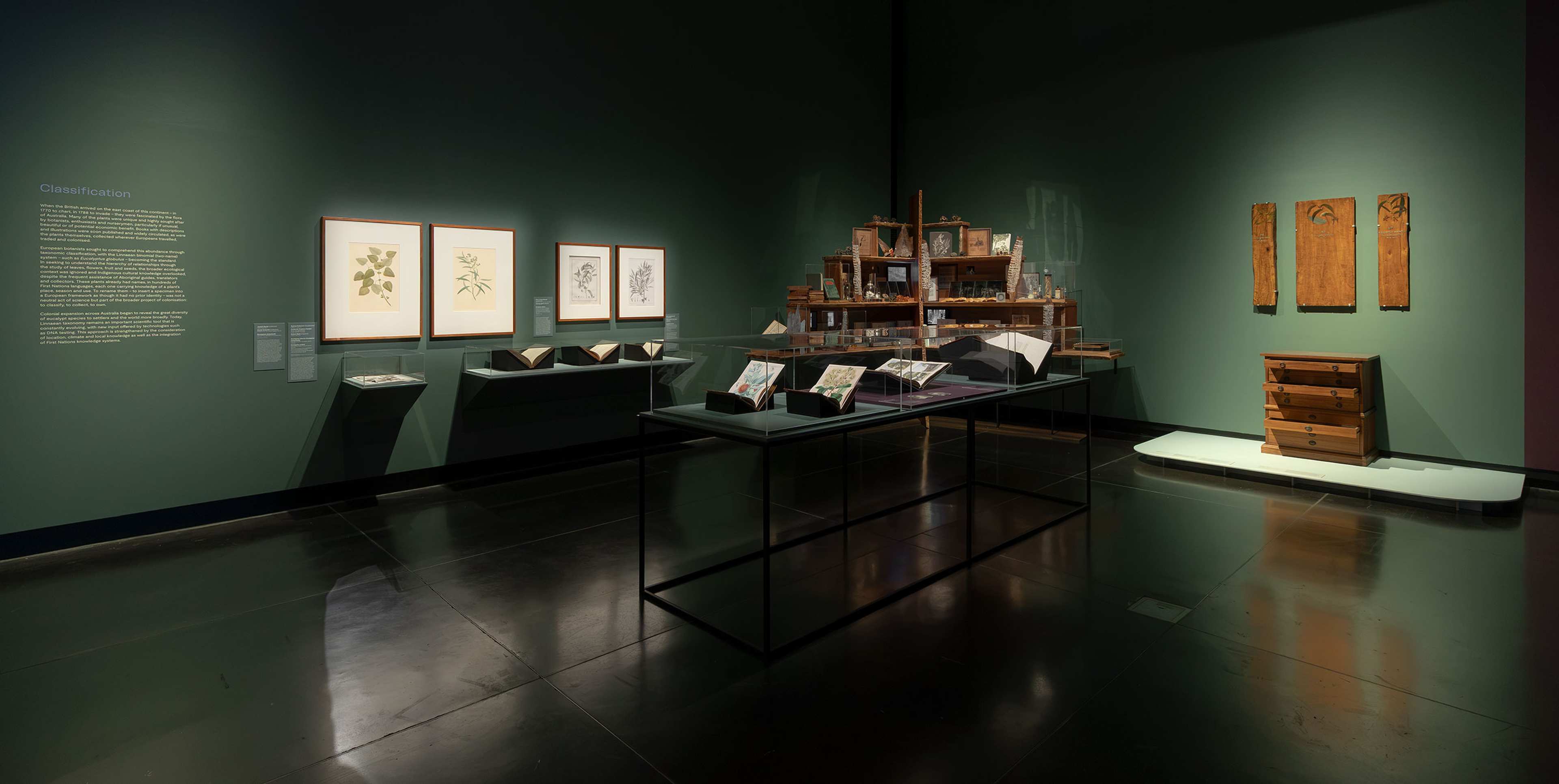
When the British arrived on the east coast of this continent – in 1770 to chart, in 1788 to invade – they were fascinated by the flora of Australia. Many of the plants were unique and highly sought after by botanists, enthusiasts and nurserymen, particularly if unusual, beautiful or of potential economic benefit. Books with descriptions and illustrations were soon published and widely circulated, as were the plants themselves, collected wherever Europeans travelled, traded and colonised.
European botanists sought to comprehend this abundance through taxonomic classification, with the Linnaean binomial (two-name) system – such as Eucalyptus globulus – becoming the standard. In seeking to understand the hierarchy of relationships through the study of leaves, flowers, fruit and seeds, the broader ecological context was ignored and Indigenous cultural knowledge overlooked, despite the frequent assistance of Aboriginal guides, translators and collectors. These plants already had names, in hundreds of First Nations languages, each one carrying knowledge of a plant’s place, season and use. To rename them – to insert a specimen into a European framework as though it had no prior identity – was not a neutral act of science but part of the broader project of colonisation: to classify, to collect, to own.
Colonial expansion across Australia began to reveal the great diversity of eucalypt species to settlers and the world more broadly. Today, Linnaean taxonomy remains an important scientific tool that is constantly evolving, with new input offered by technologies such as DNA testing. This approach is strengthened by the consideration of location, climate and local knowledge as well as the integration of First Nations knowledge systems.