Witness
Ground Level
Gum trees are among the longest-living beings on this continent. Many stand today carrying centuries within their roots. They have seen what has come and gone. They have watched the lives, the joys and the deaths of those living among them. The arrival of strangers, the clearing of forests, the lighting of fires both careful and careless. They have seen violence and survival, celebration and silence, destruction and regrowth.
Early colonists across south-eastern Australia encountered expansive forests and trees of unbelievable stature. Encouraged by British expansionist policies, they viewed the land as a resource to use and ‘improve’. At their hands, giant trees fell under the axe and saw. Land was cleared for crops and stock, timber used for buildings, fences and fuel. What many perceived as untouched wilderness was in fact something else entirely: grassland between trees was evidence of carefully tended Country, kept in balance for millennia. While concern for Australia’s plundered forests grew among settlers, with Australia’s first national park created in 1879, what had once been healthy, diverse Country was profoundly changed.
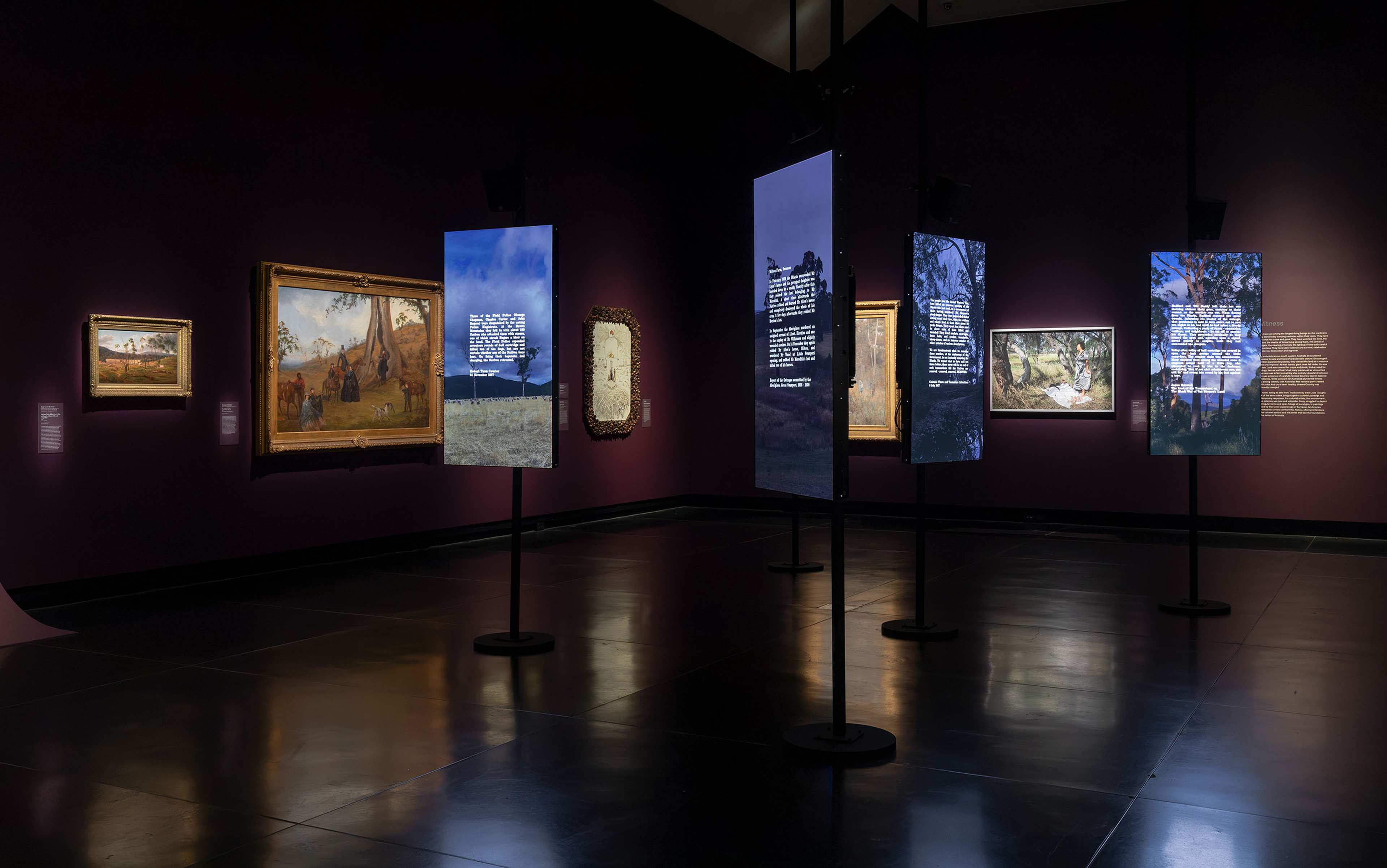
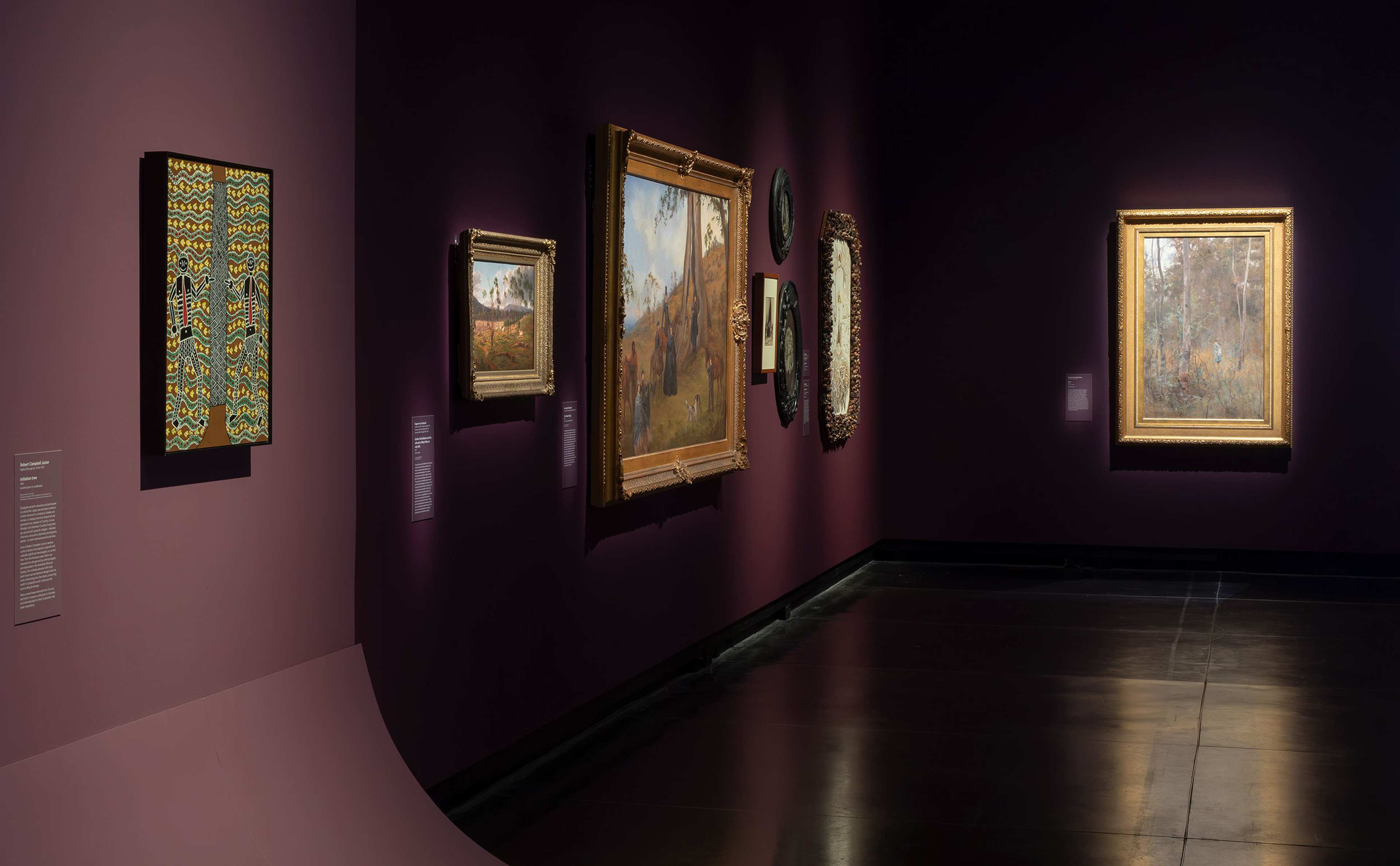
This room, taking its title from Trawlwoolway artist Julie Gough’s work of the same name, brings together colonial paintings and contemporary responses. For colonial artists, the environment in the colonies was new and unfamiliar. Many struggled to depict the irregular shapes and open foliage of eucalypts, in paintings shaped by their prior experiences of European landscapes. Contemporary artists confront this history, offering reflections on the colonial actions and industries that laid the foundations for the nation of Australia.
Rooms on Ground Level



If you have visited all rooms on Ground Level, take the stairs or lift to Level One to explore more of the exhibition.